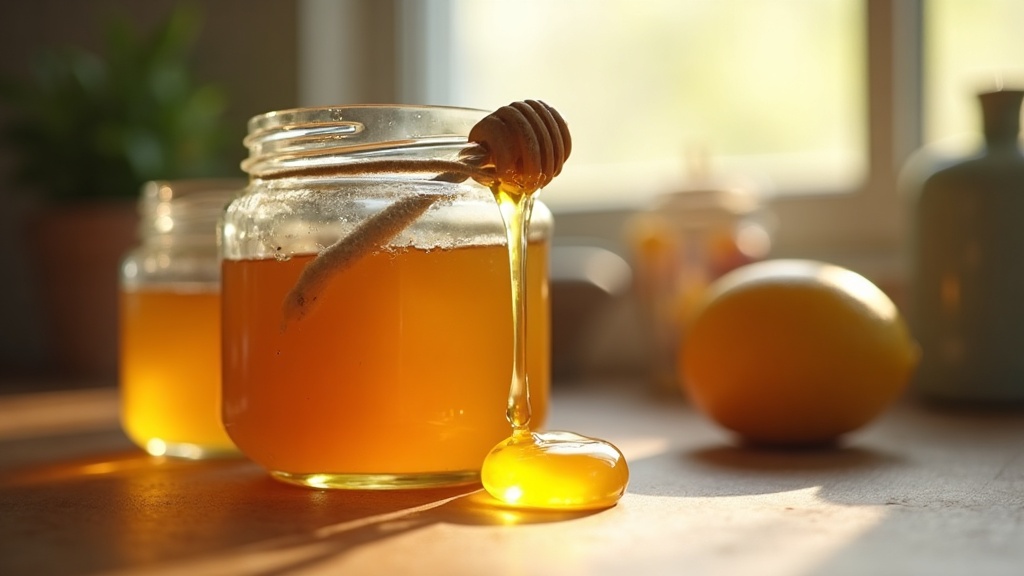
A short video walks through why so many people are pairing honey with their daily routines as part of a broader look at focus, recall, and mental clarity as we age — no hype, just context.
nResearchers estimate that most adults notice some change in recall speed by their mid-fifties. Here’s what tends to be happening beneath the surface — including where honey enters the conversation.
nThe brain doesn't stop working — it just takes a little longer to retrieve certain details, especially names and recent conversations.
Deep sleep stages shorten with age, and this is the window when the brain organizes and files away the day's information.
Some people report that steadier energy through the day — the kind honey is often discussed in relation to — seems to line up with clearer afternoons.
Chronic low-grade stress keeps the mind occupied with background noise, leaving less bandwidth for focused recall.
A lot of what circulates about brain health after 50 is oversimplified. Here’s a straightforward comparison.
nMemory decline is entirely unavoidable and identical for everyone.
nThe pace and pattern of change varies widely and is shaped by many everyday factors, including sleep, stress, and diet.
nHoney is just sugar with no meaningful difference from any other sweetener.
nHoney has a distinct composition compared to refined sugar, which is part of why it’s discussed differently in traditional and modern contexts.
nIf you’re not doing puzzles every day, your brain is falling behind.
nMental engagement matters, but it’s one piece among several — routine, rest, and nutrition all play a role too.
nThis isn’t a program to follow blindly — it’s a framework for understanding what the video actually walks through.
nBefore changing anything, the video suggests paying attention to when your focus feels sharpest versus foggiest during the day.
nSleep, hydration, and steady energy sources — including how honey fits into a daily routine — are covered as foundational pieces.
nThe presentation emphasizes small, repeatable habits over dramatic overnight changes.
nHoney has been referenced in traditional wellness practices across many cultures for centuries, often alongside conversations about energy and vitality. Modern interest has revisited these older observations through a more contemporary lens, looking at composition, natural sugars, and how they might fit into daily nutrition patterns for people over 50.
nThe video frames this less as a discovery and more as a reconnection — old habits being re-examined with today’s questions in mind.
nOccasional slips are normal, but a repeated pattern with close friends or family is worth noting.
Frequently losing the thread of what you were saying may be more than a one-off distraction.
Occasionally putting keys in the fridge happens — a consistent pattern deserves attention.
Difficulty following a recipe or routine you've done for years can be a signal to look closer.
Getting turned around in familiar neighborhoods more often than before is a pattern many people mention.
Some people pull back socially when they notice recall feels harder than it used to, which is worth acknowledging.
These are individual experiences shared voluntarily and do not represent guaranteed outcomes. Results and perceptions vary from person to person.
nThe video is an educational presentation that discusses ingredients and habits, including honey, within a broader wellness context.
nNo. Nothing in this content diagnoses, treats, cures, or prevents any condition. It’s presented for general informational purposes only.
nIt’s a short presentation designed to be watched in one sitting, with no lengthy commitment required.
nNot necessarily — many viewers watch simply to understand general changes that come with aging.
nNo. The framework is meant to be informative first; any decisions about your routine are entirely up to you and your healthcare provider.
nThe video references traditional and contemporary discussions around nutrition and cognitive habits, but it is not a substitute for medical research or advice.
nYes. Always consult a qualified healthcare professional before making changes related to diet, supplements, or health routines.
nIt’s a short, straightforward watch — no pressure, no obligation, just information laid out clearly for you to consider at your own pace.
nAdvertising Disclosure: This page is a sponsored advertisement and contains affiliate links. We may receive compensation if you click a link or make a purchase through the links provided on this page. This content is intended for informational and educational purposes and should not be considered independent editorial content.
nContent Disclaimer: The information provided on this page is for educational purposes only and has not been evaluated by the Food and Drug Administration (FDA). This content is not intended to diagnose, treat, cure, or prevent any disease or condition. Always consult a qualified healthcare professional before making any changes to your diet, lifestyle, or health routine.
nResults Disclaimer: Individual results vary from person to person. The testimonials and experiences shared on this page are not a guarantee of similar outcomes for any individual. Statements have not been independently verified.
n© 2026 · All Rights Reserved · Contact us at /contact/
n